Stress Relief During Slipping Economy
With the economic crisis upon us, stress begins to play a major factor in every aspect of our lives. The purpose of this article is to provide comprehensive and useful information on managing stress. Experimenting with different relaxation techniques and exercises is recommended until you find the ones that work best for you.
Relaxation Techniques
Relaxation techniques induce the relaxation response, which results in the relaxation of muscles and lowered blood pressure and pulse rate and emotional calmness. It is the opposite of the stress response. Some relaxation techniques such as meditation, deep breathing and progressive muscle relaxation can be self-taught. Though they are simple in theory they take time and patience to master.
Exercise for Relieving Stress Exercises for relieving stress may be in the form physical, mental, or spiritual exercise - or a combination of all three, e.g. yoga. What is good for the body is good for the mind and vice versa. Physical exercise is one of the most effective ways of relieving stress. Exercising the body regularly is very effective in managing stress, on its own or as a part of a stress management plan. Getting into better shape improves your mental health as well as your physical health. When we physically exert ourselves, the body releases chemical substances (endorphins) that are similar in nature to opiates. These natural substances produced by our own bodies are free of side effects, except for making us feel good. When it comes to stress management, every little bit of exercise counts. Don’t think if you can’t commit to a stringent fitness routine that it’s useless. It’s not. What motivates people to do more of something is to do little of something.
Aerobics
Any activity that gets your heart pumping (aerobic exercise) will get those endorphins flowing and relieve stress. Though you should check with your doctor before embarking on any exercise program, walking is usually safe for anyone. Try to get your heart going a little faster for at least 15 minutes a day. Even a few minutes here and there of brisk walking can provide stress relief and improve your overall health.
Exercise in a Natural Environment for Additional Stress Relieving Benefits
Obviously it is more relaxing to walk along a nature trail than to walk along a busy street. Natural surroundings trigger relaxation responses deep in the brain. Even mentally picturing being surrounded by mountains, trees, or watching the waves roll in at the beach can have this calming effect. *Exposure to daylight also has positive effects on mood - another benefit of exercising outdoors.Exercises to Suit Everyone
From doing gentle stretching exercises to keeping up in a physically demanding aerobics class, stress relief can be achieved through a wide range of activities. Some people enjoy the solitude of walking alone. Other people need the stimulation of interacting with others, whether walking in a group, participating in a yoga class or other fitness class, or playing a sport such as tennis, racquetball, etc. Interacting with other people during exercise can provide additional stress relief.
Strengthening Exercises
Though not generally as effective as aerobics for relieving stress, many people find that getting into a strengthening exercise program does relieve stress. Strength exercises are also important to prevent injury during aerobic exercise by strengthening the muscles that support your joints. A toned body has as much impact on mental wellness as physical wellness.Stretching
Stretching exercises stimulate receptors in the nervous system that decrease the production of stress hormones. Stretching exercises also relax tight, tense muscles and increase blood flow to the muscles.
Other Exercises
Yoga exercises involve the body, mind and spirit. Yoga poses improve flexibility and strength and incorporate breathing techniques that aid in relaxation and general wellness. Stress relief exercises that don’t involve movement but involve both mind and body include meditation exercises and deep breathing exercises - both have been shown to reduce blood pressure.
Self-Indulging Activities Alleviate Stress
On the days you don’t exercise, do something else you find relaxing - whether getting some massage therapy, soaking away stress in a soothing aromatherapy bath, etc. Your health is important. It is not selfish to spend time on yourself ! How can you have the energy to take care of others unless you take care of your self? Make fitness a priority. Exercise effectively relieves depression and anxiety. Find an activity that you enjoy and feel the stress melt away. Relieving Stress by exercise, especially aerobic exercise, has been proven to be highly effective.Vegetarian diet: How to get the best nutrition
A well-planned vegetarian diet is a healthy way to meet your nutritional needs. Find out what you need to know about a plant-based diet.
Adopting a healthy vegetarian diet isn’t as simple as scraping meat off your plate and eating what’s left. You need to take extra steps to ensure you’re meeting your daily nutritional needs.
Many vegetarian eating plans exist. At the very least, they exclude red meat, chicken and fish. Some vegetarian diets also exclude eggs and milk products. The Vegetarian Diet Pyramid shows a lacto-ovo vegetarian diet. It features whole grains, legumes, fruits and vegetables and includes moderate amounts of nuts and seeds, soy, egg whites, dairy products and plant oils.
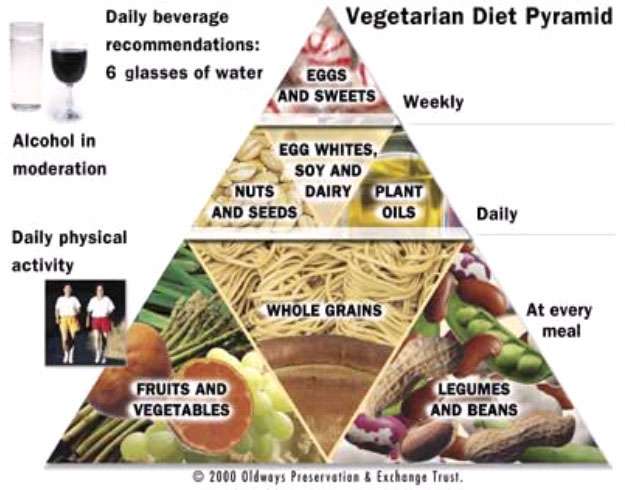
A healthy vegetarian diet consists primarily of plant-based foods, such as fruits, vegetables, whole grains, legumes, nuts and seeds. Because the emphasis is on nonmeat food sources, a vegetarian diet generally contains less fat and cholesterol, and typically includes more fiber.
Vegetarians fall into groups defined by the types of animal-derived foods they eat:
- Vegans eat only plant-based foods. They don’t eat foods from animals, including meat, poultry, fish, milk, eggs and cheese.
- Lacto-vegetarians consume milk and milk products along with plant-based foods. They omit eggs as well as meat, fish and poultry.
- Lacto-ovo vegetarians eat eggs, milk and milk products, such as cheese and yogurt, in addition to plant-based foods. They omit red meat, fish and poultry.
- Flexitarians (semivegetarians) primarily follow a plant-based diet but occasionally eat small amounts of meat, poultry or fish.
To keep your vegetarian diet on track, you may find using a vegetarian food pyramid helpful. This pyramid outlines various food groups and food choices that, if eaten in the right quantities, form the foundation of a healthy vegetarian diet.
No matter what your age or situation, a well-planned vegetarian diet can meet your nutritional needs. Even children and teenagers can do well on a plant-based diet, as can older people, and pregnant or breast-feeding women. If you’re unsure whether a vegetarian diet is right for you, talk to your doctor or a registered dietitian.
Meat alternatives
Meatless products, such as tofu dogs, soy burgers, nut loaves or texturized vegetable protein, add variety to your vegetarian diet. These products, found in many grocery stores and health food markets, simulate the taste and texture of meat and usually have less fat and fewer calories. Many of the meatless products, such as tofu or tempeh, are made from soybeans.
If you follow a vegan diet, you may need to find alternatives for eggs and dairy products. Try these suggestions when meal planning or cooking:
Milk. Drink fortified soymilk, rice milk or almond milk in place of cow’s milk.
Butter. When sauteing, use olive oil, water, vegetable broth, wine or fat-free cooking spray instead of butter. In baked goods, use canola oil.
Cheese. Use soy cheese or nutritional yeast flakes, which are available in health food stores.
Eggs. In baked goods, try commercial egg replacers — a dry product made mostly of potato starch. Or you can use the following to replace one egg: 1/4 cup whipped tofu or 1 tablespoon milled flaxseed mixed with 3 tablespoons of water. For an egg-free omelet use tofu instead of eggs.
Ensuring adequate nutrition
The more restrictive a diet is, the more difficult it is to get all the nutrients your body needs. A vegan diet, for example, eliminates food sources of vitamin B-12, as well as milk products, which are a good source of calcium. Other nutrients, such as iron and zinc, are available in a meatless diet, but you need to make an extra effort to ensure they’re in yours.
Here are nutrients that may be deficient in a vegetarian diet and how you can get these nutrients from nonmeat sources:
- Protein. Your body needs protein to maintain healthy skin, bones, muscles and organs. Vegetarians who eat eggs or dairy products have convenient sources of protein. Other sources of protein include soy products, meat substitutes, legumes, lentils, nuts, seeds and whole grains.
- Calcium. This mineral helps build and maintain strong teeth and bones. Low-fat dairy foods and dark green vegetables, such as spinach, turnip and collard greens, kale, and broccoli, are good sources of calcium. Tofu enriched with calcium and fortified soy milk and fruit juices are other options.
- Vitamin B-12. Your body needs vitamin B-12 to produce red blood cells and prevent anemia. This vitamin is found almost exclusively in animal products, including milk, eggs and cheese. Vegans can get vitamin B-12 from some enriched cereals, fortified soy products or by taking a supplement that contains this vitamin. - Iron. Like vitamin B-12, iron is a crucial component of red blood cells. Dried beans and peas, lentils, enriched cereals, whole-grain products, dark leafy green vegetables, and dried fruit are good sources of iron. To help your body absorb nonanimal sources of iron, eat foods rich in vitamin C — such as strawberries, citrus fruits, tomatoes, cabbage and broccoli — at the same time you consume iron-containing foods.
- Zinc. This mineral is an essential component of many enzymes and plays a role in cell division and in the formation of proteins. Good sources of zinc include whole grains, soy products, nuts and wheat germ.
The key to a healthy vegetarian diet — or any diet for that matter — is to enjoy a wide variety of foods. Since no single food provides all of the nutrients that your body needs, eating a wide variety helps ensure that you get the necessary nutrients and other substances that promote good health.
Getting started
If you’re thinking of switching to a vegetarian diet but aren’t sure where to begin, start with menu planning.
- Start with what you know. Make a list of meatless meals you already prepare regularly, such as spaghetti with tomato sauce or vegetable stir-fry.
- Make meatless substitutions. Select meals that could easily become meat-free with a couple of substitutions. For example, you can make vegetarian chili by leaving out the ground beef and adding an extra can of black beans or soy crumbles. Or make fajitas using extra-firm tofu rather than chicken. You may be surprised to find that some dishes require only simple substitutions.
- Experiment with new meal ideas. Buy or borrow vegetarian cookbooks. Scan the Internet for vegetarian menus or for tips about making meatless substitutions. Check out ethnic restaurants to sample new vegetarian cuisine. The more variety you bring to your vegetarian diet, the better the chance you’ll meet all your nutritional needs.
By Mayo Clinic Staff
Jan 5, 2008
A look at the role of chiropractors in the NFL by Dr. Spencer Baron
Well, for all of you fans out there, week one of the NFL is done…hope you enjoyed it. Do you ever wonder how it is these guys keep coming back, week after week, tackle after tackle? Perhaps the chiropractic angle has played a larger role than what you suspected.
One thing professional athletes do not have to worry about is healthcare. Teams want their players healthy; they want to get their money’s worth. Longevity on the playing field is paramount, because for every year a player remains competitive, millions of dollars may be earned.
A perfect example is the $35 million salary of quarterback Peyton Manning. His healthcare team would not use the “no pain, no gain” treatment principles depicted in the 1979 motion picture North Dallas Forty.
Scenes in that movie showed players receiving multiple shots of anesthetics for torn ligaments and tendons so that they could continue playing.
Today, athletes, their agents, athletic trainers, and medical doctors understand the consequences of disabling the pain mechanism and have come to align themselves with the chiropractic perspective — treat the cause of the pain.
All but one of the 32 teams in the National Football League (NFL) utilize the services of a chiropractor as part of the triage in managing and preventing injuries. (Only one team does not publicly admit to using chiropractic care — the Oakland Raiders.)
Three teams have two chiropractors who adjust players, and a few teams engage DCs to perform only soft-tissue work, independent of the adjusting DC.
The average pro football chiropractor renders 30 to 50 treatments per week during the season. With the in-season (game-playing) duration lasting 16 weeks (not including quarterback camp, mini-camp, and pre- and post-season), 34 chiropractors conservatively give 16,320 to 27,200 adjustments to America’s superstars in just 120 days.
The diversity of relationships among the 31 teams and their chiropractors has generated the formation of the Professional Football Chiropractic Society (PFCS). Our main goal is to provide consistency among constituents, as we take the best practices from each alliance and create a template to apply to chiropractors who work with other pro sports.
With professional football — namely, the NFL — as the best-run business in sports (next to auto racing), these parameters bear a critical view for chiropractic to position itself as an indispensable tool in the wellness care, improved sports performance, and injury rehabilitation of professional athletes.
A PRO TEAM DC PROFILE
Recently, the PFCS surveyed its members about their team relationships. A compilation of statistics from the survey reveals some interesting information:
• Titles vary. Of the 32 teams, 24 chiropractors are referred to as the “official chiropractor.” Three are specifically considered “chiropractic consultants,” while 24 are listed as the “team chiropractor.”
• In the media. Ten team chiropractors are listed in the media guide, which is sent to every media outlet in the country and beyond. Three are listed on their team’s Web site, which is the property of the NFL.
• Shared quarters. War stories whispered throughout our profession indicated that in the past, players who wanted chiropractic adjustments had to meet with a chiropractor in hotel bathrooms, parking lots, or back alleys.
Now, 26 chiropractors share the training room with athletic trainers and team physicians, while 10 give adjustments in the locker room, and three treat in the weight room.
• Have table, will travel. Thirteen team chiropractors participate in the arduous task of traveling with their teams and treat players in hotel rooms or at the home team’s stadium.
• Some contractors, few employees. Sixteen (16) provide services as (1099) contractors, while four are salaried employees of the teams.
• Varied compensation. The compensation for team chiropractors ranges considerably. Twenty of the doctors receive paraphernalia (logo-laden clothing, shoes, and caps) in exchange for services. Some are given season tickets, while others receive a stipend ranging from $5,000 to $30,000 for a year’s contract that maintains and spells out the relationship.
• Insurance reimbursements accepted. The fees charged by team chiropractors vary from $40 to $220. NFL players are covered by Cigna PPO; 12 chiropractors accept reimbursements for treatment. These reimbursements can generate $40,000 to $60,000 annually.
• Many techniques. Most of the doctors use diversified adjusting techniques, although four use low-force methods, and one uses sacro occipital technique (SOT).
• Much soft-tissue work. Approximately 84 percent of the practitioners utilize one or a combination of soft-tissue techniques. Seventeen use trigger point; 13, myofascial release; 11, ART; seven, Graston; four, Nimmo; and two, MRT.
• Game-day work. Catering to the needs of a team’s management requires 16 chiropractors to render service on game day. The most common weekday for treatment is Friday.
• Men only. Currently no women provide chiropractic services to the NFL.
PERSONAL CHARACTERISTICS
Surprisingly, perhaps, the survey does not support the assumption that acquiring certification as a chiropractic sports physician (CCSP) or earning a diplomate in sports chiropractic would be career-enhancing prerequisites.
Instead, respondents say the most important characteristics to win a place on a pro team are a teamwork mindset and the ability to communicate with players and other healthcare staff.
Team chiropractors anecdotally report that referral was a key to working with the team. For example, they said, “I treated one player and he brought the others in.” and “I became friends with the athletic trainer (or medical doctor or owner) and they allowed me to come on board.”
If you have aspirations of becoming a team chiropractor — regardless of the sport — developing your professional expertise and honing your communication skills are essential. And being in the right place at the right time doesn’t hurt.
The important thing is that positioning of a chiropractor on a professional team will continue to put this profession in a high profile and very credible atmosphere —advertising we just can’t buy.
Chiropractors at the Olympics
Chiropractors have been invited to treat Olympians as team chiropractors since 1976. This year in China many countries have official team chiropractors supporting their athletes, and many more will use chiropractic outside of their team medical group. Athletes rely on chiropractic for two primary reasons; functional optimization, and recovery from injury. Chiropractic optimizes function of joints and muscles by removing restrictions that may limit range of motion or reduce neurological conduction. For the Olympian who is looking for that extra hundredth of a second having fullest range of motion and clarity of nerve signals is not just nice, it’s essential. Chiropractic enables the body to do what it needs to do at its best, whether it be healing it’s self, kicking a ball, sprinting through a finish line, or sticking that landing.
Dr. Andrew Klein, the official chiropractor for the 2000 US Olympic medical staff, identified a key reason why athletes have taken to chiropractic: it keeps them in top shape without the use of drugs. “Athletes have come to rely on manual therapy because the list of banned substances (for the Olympics) is so long and also because they feel it enhances their performance.”
These athletes are in peak condition just looking for that extra bit that they can get out of their body. Imagine what chiropractic can do for someone who has a whole lot more blocking their body from functioning. Imagine what benefit you could see from a visit to your chiropractor. Don’t spend the whole month on your couch just watching the athletes perform. Get out there and do something. For your body’s sake.
This next month you’ll watch records be broken, heroes created, and the beautiful function of the human body. It takes all of an athletes training to add up to the whole performance, from that extra mile they ran, to the mental rehearsal, to the team of physicians supporting them. So, when you watch that swimmer win by .0001seconds you can wonder what part of their training gave them that they may have their chiropractor to thank.
Can You Wear Out Your Joints? By Robert Schmerling, MD
There’s a joke I heard when I first started studying arthritis: A 90 year-old man sees his doctor complaining of pain in his knee. His doctor asks him, “What do you expect? You’re 90 years-old.” The old man replies, “Yes, but my other knee is also 90 and it feels fine.”
That pretty much sums up why “wear and tear” arthritis is not an accurate description of osteoarthritis (OA), or degenerative joint disease. Just because you live a long time, doesn’t mean you’ll inevitably wear out your joints.
Why Your Joints Aren’t Like Tires
Degenerative joint disease is more common with aging, so it may seem logical to assume osteoarthritis is due to “wear and tear.” It’s also true that extreme or unusual stress on joints can cause damage that leads to osteoarthritis. But for most people, arthritis due to normal wear and tear is a myth. Your joints aren’t like a car’s tires or a light bulb that inevitably wears out over time with enough use.
Osteoarthritis occurs when the smooth, shiny cartilage that lines the joint deteriorates. In some cases, this can happen after an injury but for most people it’s a result of aging and genetics. The most common locations for osteoarthritis are the:
- Knees
- Hips
- Finger and toe joints
- Upper and lower spine.
One thing we know for sure about osteoarthritis — it’s very common. An estimated 21 million people in the United States alone have OA. If you’re fortunate enough to live to age 75 or older, chances are perhaps as high as 70% to 90% that you’ll have OA in at least some joints. With these numbers staring at you, it’s reasonable to wonder if there’s something you can do to prevent it. Specifically, should you limit your activities so you don’t “wear out” your joints?
Is Exercise the Culprit?
For most people, exercise is a good thing. But at what point does exercise do more harm to joints than good? Are running and jogging actually harmful for the knees or other weight-bearing joints? Does exercising too long or too intensely damage the joints?
Clearly, running stresses the weight-bearing joints. In fact, up to 5 to 7 times your weight is supported by your knees while jogging. Weight-bearing joints are subject to even higher stresses with jumping or suddenly starting and stopping over and over. Although the research is mixed, long-term runners are not clearly more likely to wear out their weight-bearing joints than people who are sedentary.
For example, a large study of runners published in 1998 found that over a nine-year period, members of a running club ages 50 and older had no higher incidence of OA than an otherwise similar group of non-runners. A more recent study came to a similar conclusion. Runners averaging 3.5 miles of roadwork each day had 25% less musculoskeletal pain than those averaging just 2 miles each week.
A little soreness might be worth suffering through if you enjoy running (or other physical activity) and want the cardiovascular benefits. But sudden, severe injury (a fracture or ligament tear) from repetitive use can cause cartilage damage that can lead to osteoarthritis even though it may take years for it to develop.
That’s why experts recommend that you avoid sudden increases in how far or how fast you run so that you don’t develop a stress fracture. Here’s what happens. The repeated pounding of running causes a bone in the foot or leg to break because it can’t repair itself as fast as it is injured. This is one example of “overtraining,” or exercising so much that an injury follows.
So, if you are training for a special event, such as a marathon or tryouts for the lacrosse team, you probably need to dial your training up a notch or two. To avoid a stress fracture or other injuries related to overtraining, follow these two rules of thumb:
- Don’t increase your effort by more than 5% to 10% per week. For example, if you’ve been comfortable running 3 miles in 30 minutes (10-minute miles) five days a week, don’t suddenly start running eight-minute miles. You might be able to do it, but you may pay for it.
- Don’t increase your distance and speed at the same time. Change one or the other, and do it gradually. If you notice pain or discomfort in one part of your body that doesn’t promptly improve with rest, back off — you may be pushing things too fast.
When it comes to the question of joint-use and osteoarthritis, it’s important to distinguish a sudden, severe injury like a fracture or ligament tear, from a repetitive-use injury that can occur from running, for example. A joint fracture may lead to osteoarthritis years later. So, for people who are not participating in highly competitive activities in which acute injuries are common, there is no clear connection between repetitive use and osteoarthritis.
Consider Your Hands
Perhaps the best argument against a direct connection between use (or overuse) and osteoarthritis is when OA affects the hands. Finger joints with OA look very similar to the knees with OA, yet we don’t bear weight on the hands — at least I don’t. There’s also the observation that “handedness” doesn’t play a part in osteoarthritis. If 90% of people are right-handed and if osteoarthritis were purely use-related, there ought to be a lot more right-hand arthritis compared to left-hand involvement. That’s simply not the case.
Hand OA is a good example of genetics at work: If your parent or other first-degree relative has OA of the hands, it markedly increases your risk of the condition.
Protecting Your Joints From Stress Versus Disease
“Use it or lose it” is certainly a concept that applies to the joints. The fact is, joints were meant to be used. A condition appropriately called “frozen shoulder” can develop within a week or two if the shoulder doesn’t move, even if there was no injury involved! That’s a good reason to avoid using a sling for prolonged periods and why range of motion exercises are so important after an injury or surgery. It’s also why people who already have arthritis are encouraged to keep moving.
The concept of “joint protection” is typically applied to people who have arthritis as a way to encourage use while avoiding excessive stress on the joints. For example, rather than carrying a heavy load with your hands, rest it on your forearms and use your arms rather than hands to carry it. The same concept is applied to exercise — swimming or biking provide excellent cardiovascular exercise that is easier on the joints than jogging.
These measures may lead to less pain or stiffness — that is, they may protect you from joint pain by avoiding stress to the joints. Unfortunately, that’s not the same as protecting the joints from deterioration, which joint-protection measures cannot reliably accomplish.
What Causes OA?
If OA is not caused by wearing out the joints, what causes it to develop? The answer varies, depending on whom you ask and whose joints you ask about. In fact, there is often no single cause that can be identified. There may be several potential explanations. Often there is no reasonable explanation at all.
The most common risk factors for osteoarthritis include:
- Advanced age
- Obesity
- Family history – Up to 50% of osteoarthritis is thought to be related to inherited tendency to develop joint degeneration
- Injury – especially a fracture that involves the joint)
- Rheumatoid arthritis (or other diseases that cause chronic joint inflammation)
However, these are risk factors, not causes. Plenty of older, overweight people never develop OA.
The Bottom Line
If you’re worried about “using up” your joints, remember that there is not a limit on the number of times you can make a fist and there is no “shelf-life” for the knees. From my reading of the available research, it’s much better to be physically active than to hold back to protect your joints. If they aren’t bothering you with the activities you’re doing, it’s unlikely you are harming them. Perhaps someday you’ll have 90 year-old knees that serve you well and feel just fine. But if you do develop arthritis, don’t blame the exercise. In the absence of significant injury, it might make more sense to blame your parents.
Spinning Toward Back Pain by Martica Heaner
Q. I thought that cycling was safe since it’s a low-impact activity. But after every spinning class I take, my lower back hurts. What am I doing wrong?
A. Many people assume that since you’re not jumping and doing high-impact exercise when you ride, bicycling is safe. This is a misconception (as is the idea that jumping is unsafe—it’s not). A 1995 survey in the International Journal of Sport Medicine of more than 500 men and women who cycled recreationally found that 85 percent had at least one overuse injury, and more than one-third of those injuries were severe enough to require medical attention. The truth is, any type of exercise from gentle stretching to long-distance running can result in overuse injuries if excess stress is placed on joints for too long or too quickly, or if joints are misaligned while performing a move. As with other activities, injury risks from cycling increase the more you do it. And certain body positions are usually to blame. The most common injuries are to the neck, knee, groin, hands/wrist and lower back. Surveys show that up to 70 percent of cyclists suffer from injuries to the spine. But you can often prevent, improve or eliminate back problems with proper bike setup. By sitting on the bike in the most back-friendly position possible, you can reduce much of the aggravating stress to the neck and the rest of your spine. Serious cyclists and indoor-cycling spinners, who mimic many of the behaviors of bike racers during their bike-class workout, may be at the highest risk because they hyper-flex the spine by assuming an extreme bent-over, flat-back seated position. Dropping the handle bars low and leaning all the way over is a no-no for almost everybody, and especially if you have a back problem. Cyclists who race can justify this alignment because it can help them win—bending over reduces the body surface area that encounters wind resistance and can improve speed. Indoor spinners are happy to hunch over to practically kiss their handlebars, too, but this is a bad move for them: The potential risk to the spine is not justifiable. Indoors, there is no wind and you aren’t moving, so there is no point to slumping over the handlebars, other than trying to look cool. And bike cred can come at a cost because this extreme forward flexion of the lower back can compresses the spinal discs, and strain the facet joint capsules, ligaments and muscles of the back. Some cyclists who train indoors for outdoor rides believe they should practice being in this position. In fact, there is no evidence that doing so will make an outdoor ride any easier or less stressful to the back. It’s better to save that bent pose for when you need it outside—if you ever need it, and unless you are entering bike races, you don’t. Bending over deeply also strains the neck because when you’re crouched down low, you must hyper-extend in order to look straight ahead. Again, save this position for a race. So what’s an ache-prone cyclist to do?
SIT TALL
First, raise your handlebars. The higher they are, and the closer the bars are to your body, the less you have to reach and bend to support yourself. Different brands of spinning bikes have different heights. The newest models are designed to be more ergonomically correct with adjustable bars that go higher than the original models. Aim for a hip-to-shoulders lean that forms a diagonal-to-vertical line, not a flat, horizontal line that’s parallel to the floor.
KEEP YOUR LOW BACK ARCHED, NOT ROUNDED
Be aware of how you hold your spine. Even when your bars are raised, you can still slump and put pressure on your lumbar discs. The key is to maintain a neutral curve in your lower back—this is the natural arch where you spine dips inwards a little bit. Spines are strongest when this curve is preserved. Try raising your rib cage high and away from your pelvis while seated. This will lengthen your spine and preserve that neutral, slightly arched position. Lean from this lengthened position.
DON’T SUCK IN YOUR GUT Avoid the big ab-tightening mistake that many cyclists make. Cycle instructors may encourage you to work your core or contract your abs. But many people pull their gut in so tight that they collapse their lower back and push their spine out so that the lower spine rounds, erasing that natural, strong arch. Stop this slumping pose by lengthening your spine as you lean forward and engaging the abs only slightly. Think of creating a wall of muscle, not a sucked-in six-pack.
TILT THE FRONT OF YOUR SADDLE DOWN
A 1999 study in the British Journal of Sports Medicine found that seat alignment can help a cyclist maintain the proper spinal curve. Angling the front of the saddle slightly down causes a weight shift that keeps the spine in its strongest position, with a natural curve at the lower back. Alternatively, avoid the opposite position: tilting the nose up higher than the back part of the seat. This drops your butt and can create the same low-back collapse as bending over too low or sucking in the abs too much.
LEAN FROM YOUR HIP, NOT WAIST
As you lean and form a diagonal line, keep your torso somewhat rigid and lean from the bend where your hips and upper thighs meet, rather than bending over at your waist and lower back. Some core-strengthening exercises such as the plank or a superman can also help. But your first step should be eliminating the main source of spinal stress by correcting your alignment.
Lack of Vitamin D Linked to Pain by Salynn Boyles
Study Shows Limited Sun Exposure Has Health Benefits
– There is new evidence that small amounts of unprotected sun exposure could be good for you. Earlier studies have linked vitamin D deficiency with an increased risk for several cancers. Now comes word that it may also be a major cause of unexplained muscle and bone pain.
In a study involving 150 children and adults with unexplained muscle and bone pain, almost all were found to be vitamin D deficient; many were severely deficient with extremely low levels of vitamin D in their bodies.
Humans tend to get most of their vitamin D from exposure to sunlight, so those who avoid the sun completely or who always wear sunscreen to protect themselves against skin cancers are at risk for vitamin D deficiencies, says Michael Holick, MD. Holick runs the Vitamin D Research Lab at Boston University Medical Center.
“I think the current message that all unprotected sun exposure is bad for you is too extreme,” he explains. “The original message was that people should limit their sun exposure, not that they should avoid the sun entirely. I do believe that some unprotected exposure to the sun is important for health.”
Dermatologists Disagree
Holick claims there is now a strong epidemiological case linking vitamin D deficiency with a host of cancers including those of the prostate, colon, and breast; and he says vitamin D may also help protect against heart disease, autoimmune diseases, and even type 1 diabetes.
He will present the evidence in a book scheduled for publication next spring, but the nation’s largest dermatology group remains unconvinced. In a recent press release, American Academy of Dermatology officials wrote that they were “deeply concerned” that the message that unprotected sun exposure may have health benefits could “mislead the public about the very real danger of sun exposure, the leading cause of skin cancer.”
Patients Should Be Tested
In the latest study, Gregory A. Plotnikoff, MD, of the University of Minnesota Medical School found a much higher incidence of vitamin D deficiency in the patients with unexplained muscle and skeletal pain than expected, regardless of their ages.
All of the African Americans, East Africans, Hispanics, and Native Americans who participated in the study were vitamin D deficient, as were all of the patients under the age of 30.
The researcher says it was a big surprise that the worst vitamin D deficiencies occurred in young people — especially women of childbearing age. The findings are reported in the December issue of the journal Mayo Clinic Proceedings.
“The message here is that unexplained pain may very well be linked to a vitamin D deficiency,” Plotnikoff explains. “My hope is that patients with unexplained pain will be tested for vitamin D status, and treated, if necessary.”
Food and Pills
Although it is possible to get vitamin D through foods or supplements, both researchers say it is not easy. A glass of fortified milk or fortified orange juice has about 100 international units (IU) of vitamin D and a multivitamin typically has 400 IU. Holick believes most people need about 1000 IU of vitamin D each day. The recommended dietary allowance (RDA) for vitamin D varies with age, sex, and various medical conditions but in general is 200-600 IU per day.
Other sources of vitamin D include:
· Cod Liver Oil. 1 tablespoon=1360 IU of vitamin D
· Salmon. 3 ounces=425 IU of vitamin D
· Herring. 3 ounces=765 IU of vitamin D
· Sardines. Canned, 3 ounces=255 IU of vitamin D
Multivitamin supplements commonly provide 200-400 IU of vitamin D daily.
He says a light-skinned person wearing a swimsuit at the beach will have absorbed about 20,000 IU of vitamin D in the time it takes their skin to get lightly pink.
The amount of sun exposure needed to get the proper dose of vitamin D depends on a person’s skin type, where they live, and time of year, and time of day the exposure occurs. Holick says it is difficult for people living in northern climates to get the vitamin D they need from the sun in the winter, but in the summer a light-skinned person at the beach should get all the vitamin D they need in about five minutes.
“The trick is getting just enough sun to satisfy your body’s vitamin D requirement, without damaging the skin,” he says. “It is difficult to believe that this kind of limited exposure significantly increases a person’s risk of skin cancer.”
Keeping your resolutions by Britt Michaelian
The holidays are over. New Year’s resolutions are fresh and waiting to be utlized. New members have joined gyms in the hopes that they will get in shape in the new year. People are eating healthier and feeling good about the year to come. And how are you feeling? Did you make any resolutions?
It all seems quite daunting when you think about the committment you have made to yourself to be a better you. It is a noble aspiration, to be better at something, but often times can lead to disappointment as people fail to follow through with their goals. One thing that we always hear around this time of year is that people are really going to “make a change”. They want everything to be different and think that the new year will be the answer to their past shortcomings. Then, after a few days or weeks of dedication, people find themselves back in their old habits.
The Secret to Keeping Resolutions
Here is the secret to making New Year’s resolutions stick… make them small and attainable! Set bench marks to raise your goals and reward yourself for achieving them! If joining a gym and working out every day seems like a dream come true, but a reality in Neverland, you need to get real. You don’t want to waste your money on something that you will never use. Instead, make a committment to going for a walk at least 3 times a week for 20 minutes. Then, if you can stick with that for a month, ramp it up to walking 5 days a week for 20 minutes. If you achieve goal #2, reward yourself with a massage or another healthy treat. Three months down the road, if you are still walking 5 days a week, join a gym and get a trainer (you only need a few sessions to get you started).
This same message translates to eating (or drinking or any other change you want to address). Take small steps and as you achieve those goals, challenge yourself until you feel happy with what you have accomplished. If eating healthy is your thing, start by eating a healthy breakfast then move on to lunch and dinner. Personally, I find that if I eat a piece of fruit and a cup of yogurt in the morning, I feel good about having eaten at least one good meal a day and then I am less likely to ruin it by going crazy later. I like treats, but am trying not to eat them as often. It is all about moderation, as they say…
Be Your Own Cheerleader (Or Find One!)
Be good to yourself, not hard on yourself. If you find that you are having a hard time with your choices and habits, it might help to look at what you are getting from those behaviors that you are not willing to part with. If it is really a problem, you might consider finding a good friend to talk to about it or even a support group or therapist.
A new year is the start of a new opportunity to love yourself and treat yourself well. Even though we are on the second month of 2008, take this time to look at yourself and find ways that you can be a better you without making yourself miserable. Enjoy your life and look to others for help if you need it. Life is about making the world a better place, so start with you and have a healthy and happy new year!
How to Assemble Family Disaster and Emergency Plans By Britt Michaelian
In this day and age it is unrealistic to think that anyone is exempt from the dangers of natural or man-made disaster. As a result, it is crucial for families to take some simple steps to make sure they are prepared in the event of an earthquake, flood, tsunami, wild fire, terrorist attack or other catastrophic event. Find out what disasters are likely in your area and put together a Family Evacuation Plan.
If earthquakes are common in your area, it is a good idea to have bag under each person’s bed with a flashlight, change of clothes and pair of sturdy shoes, so it is easy to grab and leave quickly. In the event of a fire, families should have two exit strategies for each room in their home. Whether your Family Evacuation Plan is to exit using a window or a door is up to you, but the best way to make sure everyone is prepared is to take 15 minutes as a family to go into each room and discuss the possibilities. While you do this, make sure you take notes and after your initial home tour, make a diagram to post in the kitchen or other high traffic area.
Another important element of the Family Evacuation Plan is to establish meeting places outside of the home where everyone will meet up if an evacuation is in order. The first meeting place should be directly outside of the home, for example on the sidewalk or in front of the next-door neighbor’s house. The second meeting place is an out of area location, one that is outside of your immediate neighborhood.
As part of the Family Disaster Plan, you will need to practice duck, cover and hold (for earthquakes or tornados) and stop, drop and roll (for fire) drills with anyone over the age of 2 in your home. The more prepared you are for the worst case scenario, the better off your family will be in an actual disaster.
All of this information should be recorded and discussed regularly, so that parents, grandparents and anyone who might be taking care of your children will know the plan as well. Find out what school and workplace evacuation plans are and record all of this in your Family Emergency Plan folder. Make sure you include local and out of area contact names, phone numbers and addresses with this information. Again, place this information in a folder and place it in an area that is easy to find.
At all times, each family member should carry a card with the above listed contact info and evacuation sites. After a disaster, each person in the family should contact the same out of area contact and let that person know their location and physical condition as soon as possible.
Disaster Kit Supplies
The most important components of the Disaster Kit are 3 days of food, water, medical supplies, sturdy shoes, blankets, flashlights, batteries and cash. All of these items should be stored in durable, easy-to-carry containers such as backpacks, duffel bags, or covered trash containers. I recommend plastic containers as we have had little critters eat through our duffle bags to get to our food supplies. Don’t forget to put together kits for your car and work as well. The following list of supplies is recommended by the Office of Homeland Security:
* A three-day supply of water (one gallon per person per day) in non-breakable containers.
* A three-day supply of nonperishable food per person.
* Food, water and supplies for pets
* One or two changes of clothing per person, and sturdy shoes. Also
include rain gear, hats and gloves.
* One blanket or sleeping bag per person.
* A first aid kit that includes your family’s prescription medications.
* Emergency tools and supplies including a battery-powered radio,
waterproof matches, compass, whistle, non-electric can opener,
utility knife, map, flashlight, and plenty of extra batteries.
*Sanitation supplies.
* Special items for infants (formula, diapers, bottles), the elderly
(prescriptions, denture needs, eyeglasses) or disabled family
members (special equipment, hearing aid batteries.)
* Important family documents stored in a waterproof container. These
can include wills, insurance policies, passports, immunization histories, and other family records.
*** Keep in mind that if you feel like this is more than you have time to assemble, there are companies that provide pre-assembled kits for you. Here are a few links for you:
www.americanfamilysafety.com
www.getredygear.com
www.thereadystore.com
One more thing you might want to consider assembling is recommended by FEMA:
Kids Activity Survival Kit
* Favorite books
* Crayons, pencils or marking pens and plenty of paper
* Scissors and glue
* Two favorite toys such as a doll or action figure
* One or two board games
* A deck of cards
* A puzzle
* Small people figures and play vehicles that you can use to play out what is happening during your disaster — such as ambulance, fire truck, helicopter, dump truck, police car, small boats.
* Favorite stuffed animal or puppet
* Favorite blanket or pillow
* Pictures of the family and pet
Proper Mattress Can Improve Sleep Comfort, Reduce Pain, Says American Chiropractic Association
A good night’s sleep is an essential part of a healthy lifestyle; however, an estimated 70 million Americans complain of sleeplessness. This October, during National Chiropractic Month, the American Chiropractic Association (ACA) is offering advice to help consumers select comfortable mattresses and pillows that can help limit unnecessary back and neck pain.
“Americans spend one-third of their lives sleeping, so it makes sense to invest in a sleep set that can improve your comfort and overall health,” says Scott Bautch, DC, DACBOH, spokesperson for the American Chiropractic Association. “Many people don’t realize the reason for their neck or back pain is literally right underneath them—it’s their mattress and pillow.”
A 2006 study published in the Journal of Chiropractic Medicine showed that sleeping on a new mattress can significantly reduce stiffness and back pain. Researchers found that study participants reported immediate and sustained benefits after sleeping on a new mattress. This was especially true of participants who entered the study with back pain complaints, as they reported a 63 percent improvement in back discomfort with a new mattress.
When it comes time to purchase a new mattress, the ACA recommends the following:
Shop for Support
Look for a mattress that provides uniform support from head to toe; if there are gaps between your body and the mattress (such as at the waist), you’re not getting the full support you need. Mattresses can be too firm; pay close attention to uncomfortable pressure on prominent body features such as the shoulders, hips and low back.
Shop for Comfort
When mattress shopping, give each option a good trial run before you buy; lie down on a mattress for a minimum of five to 10 minutes to get a good idea of its comfort level. If you cannot find a comfortable position, you probably have the wrong mattress.
Shop for Size
Does the bed provide enough room for both you — and your sleeping partner if you have one — to stretch and roll over? The ideal mattress will also minimize the transfer of movement from one sleeping partner to the other, which means one person shouldn’t feel motion as the other leaves the bed.
Generally, a mattress should be replaced every 5 to 8 years to ensure proper support and comfort. Be aware that life’s changes can signal the need for a new mattress as well. For example, people who have lost or gained a considerable amount of weight, those who have a medical condition which has changed the way they sleep, or even those who’ve changed partners may need to consider a new mattress.
Pillows important, too
After investing in a quality mattress, don’t forget to choose an equally supportive pillow, advises ACA spokesperson Steven Conway, DC, DACBOH, Esq. “People will spend thousands of dollars on a mattress and then skimp on a pillow that doesn’t support their head and neck properly,” he observes.
When selecting a new pillow, ACA recommends selecting one with ergonomically-designed features, which will enhance comfort and limit pain. Look for pillows that are:
- Designed to keep the spine in natural alignment. When lying on your side, your head and neck should remain level with your mid and lower spine. When lying on your back, your head and neck should remain level with your upper back and spine. Avoid pillows that are so thick or thin that they angle your head and neck away from your body.
- Designed to support different sleep positions, including side sleeper or back sleeper. (It’s best never to sleep on your stomach, as it’s the most back unfriendly sleeping position.)
- Hypoallergenic.
There is no such thing as a universal fit when it comes to pillows, Dr. Conway notes. “Find a pillow that is consistent with the shape and size of your body. If you find yourself sleeping on your side with one hand propped under your pillow, that’s a clue that you’re not getting the support you need from that pillow,” he explains.
If you continue to experience pain and discomfort at night or have difficulty falling asleep, visit your doctor of chiropractic. Doctors of chiropractic are trained to treat spinal problems that can interfere with a restful night’s sleep. They can also offer nutritional and ergonomic advice that can help improve the quality of your sleep. To find a chiropractor near you, view ACA’s searchable member database.
The American Chiropractic Association is the nation’s leading chiropractic organization representing more than 16,000 doctors of chiropractic and their patients.